Dental Industry
The Role of Artificial Intelligence in Modern Dentistry
Dentistry Insured by Emery & Webb, Inc. · 12/9/2024
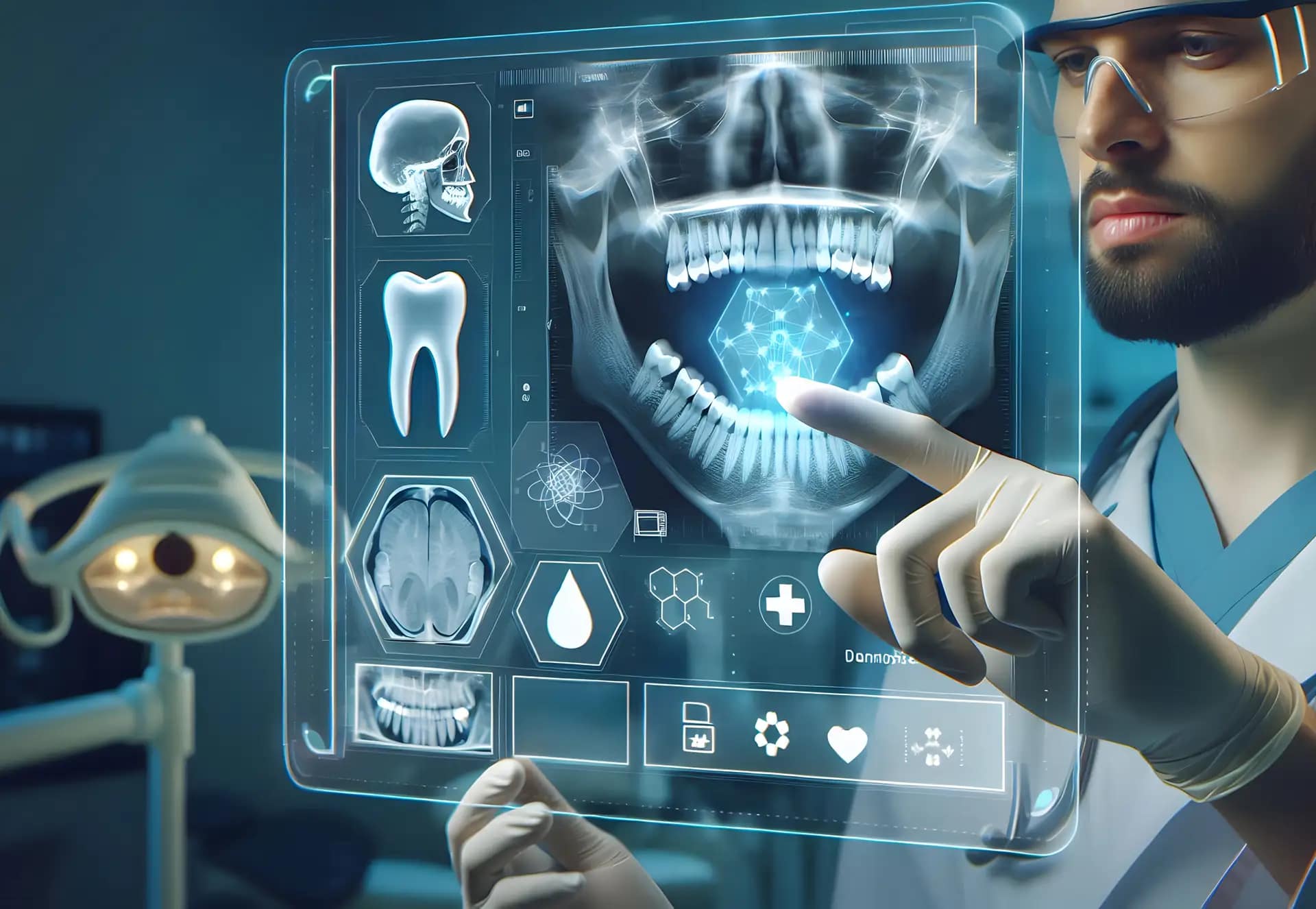
Artificial Intelligence (AI) is transforming the dental industry, offering innovative tools that improve diagnostics, streamline operations, and enhance patient care. For dental professionals, the integration of AI represents an opportunity to deliver more precise, efficient, and patient-centered care while optimizing practice management. Let’s explore the key areas where AI is making its mark.
Advancing Diagnostics and Treatment Planning
AI is revolutionizing how dentists diagnose and treat oral health conditions. AI-powered imaging systems can analyze radiographs, CT scans, and intraoral images to detect issues like caries, periodontal diseases, and oral cancers with unparalleled accuracy. These technologies reduce the risk of oversight and support early intervention, improving patient outcomes.
Machine learning algorithms also enable personalized treatment plans by processing patient data to simulate outcomes for orthodontics, restorative procedures, and even complex surgeries. For example:
• AI-driven predictive modeling assists in crafting precise orthodontic strategies.
• AI-assisted design ensures more accurate and functional prosthetics, enhancing patient comfort and satisfaction.
By incorporating AI into diagnostics and treatment planning, dentists can improve the accuracy and efficiency of their clinical decisions.
Improving Patient Engagement
AI tools are not just clinical aids; they also transform the patient experience. Technologies like virtual assistants and AI-driven patient education tools can:
• Answer frequently asked questions, ensuring patients feel informed before visits.
• Provide detailed visualizations of proposed treatments, improving patient understanding and acceptance.
• Offer tailored oral hygiene recommendations based on individual patient data.
For dentists, these tools enhance communication and build stronger patient relationships, leading to better treatment adherence and satisfaction.
Optimizing Practice Management
AI-powered systems are streamlining dental practice operations. Applications include:
• Administrative Automation: Tools handle scheduling, reminders, billing, and insurance claims, freeing staff for more critical tasks.
• Inventory Management: Predictive analytics ensure timely ordering and minimize waste by analyzing historical usage data.
• Data Insights: AI identifies patterns in patient demographics and treatment trends, enabling more strategic resource allocation and marketing efforts.
These efficiencies improve practice profitability while maintaining a high standard of patient care.
Ethical and Practical Challenges
Despite its advantages, AI adoption comes with considerations:
• Data Security: Practices must ensure patient information is securely managed and compliant with regulations like HIPAA.
• Cost Barriers: Smaller practices may struggle to afford or implement AI solutions without significant investment.
• Role of Expertise: AI is a tool to augment, not replace, the clinical judgment of dental professionals.
Addressing these challenges involves careful planning and a commitment to ongoing education.
Preparing for the Future
As AI continues to evolve, dental education must adapt to prepare practitioners for its integration. Dental schools are beginning to incorporate AI training into their curricula, and ongoing professional development will be crucial to staying current with advancements.
Looking ahead, AI offers exciting opportunities:
• Robotic-assisted surgeries for enhanced precision.
• Predictive analytics for preventive care and early detection.
• Continuous patient engagement through personalized digital platforms.
From AI-driven diagnostic tools to automated patient management systems, these innovations introduce both opportunities and unique risks, such as cybersecurity vulnerabilities and potential liability concerns. Ensuring your policy covers these emerging risks can safeguard your practice against unforeseen challenges while allowing you to fully benefit from AI advancements.
Here’s a link to the first AI standard for the dentistry industry.
Conclusion
For dentists, embracing AI is not just about adopting new tools—it’s about advancing the profession to deliver better care and operate more efficiently. As these technologies become more accessible, they promise to reshape the dental landscape, making practices more innovative and patient-focused.
By staying informed and proactive, dentists can position themselves at the forefront of this transformation, ready to harness the full potential of AI.